The Future Is Already Here: Why I Founded Extended Mind
The future is already here, just not very evenly distributed. Why some people pull ahead with AI while others stall, how to catch up — and why I founded Extended Mind.
“The future is already here. It's just not very evenly distributed.”
Those are the words attributed to William Gibson. In my own practice, I see how differently people bring AI into their work — and how profoundly that affects their professional capabilities.
Three Ways of Working with AI
Some do not use it at all, or try it only occasionally. Errors and unreliability become a reason to abandon systematic use. Yet because of a few failed attempts, it is easy to miss the tasks where AI is genuinely helpful.
For others, a capable model produces impressive outputs so quickly that the human becomes the bottleneck. You still have to understand the answer, verify its grounds, make a decision, and apply it. Attention is limited, and complex relationships are hard to hold in your head. The speed of the model by itself does not mean the work gets done faster.
And then there are those who change the way they work: they integrate AI into their own thinking and their team’s workflow. Together with AI, they clarify tasks, compare approaches, and test assumptions. They divide the work between human and AI, defining what to check and how. The decision on whether the result can be used is made by the human (!). Successful methods are locked in and refined on subsequent tasks. That is how these professionals and teams pull ahead.
You Can Catch Up
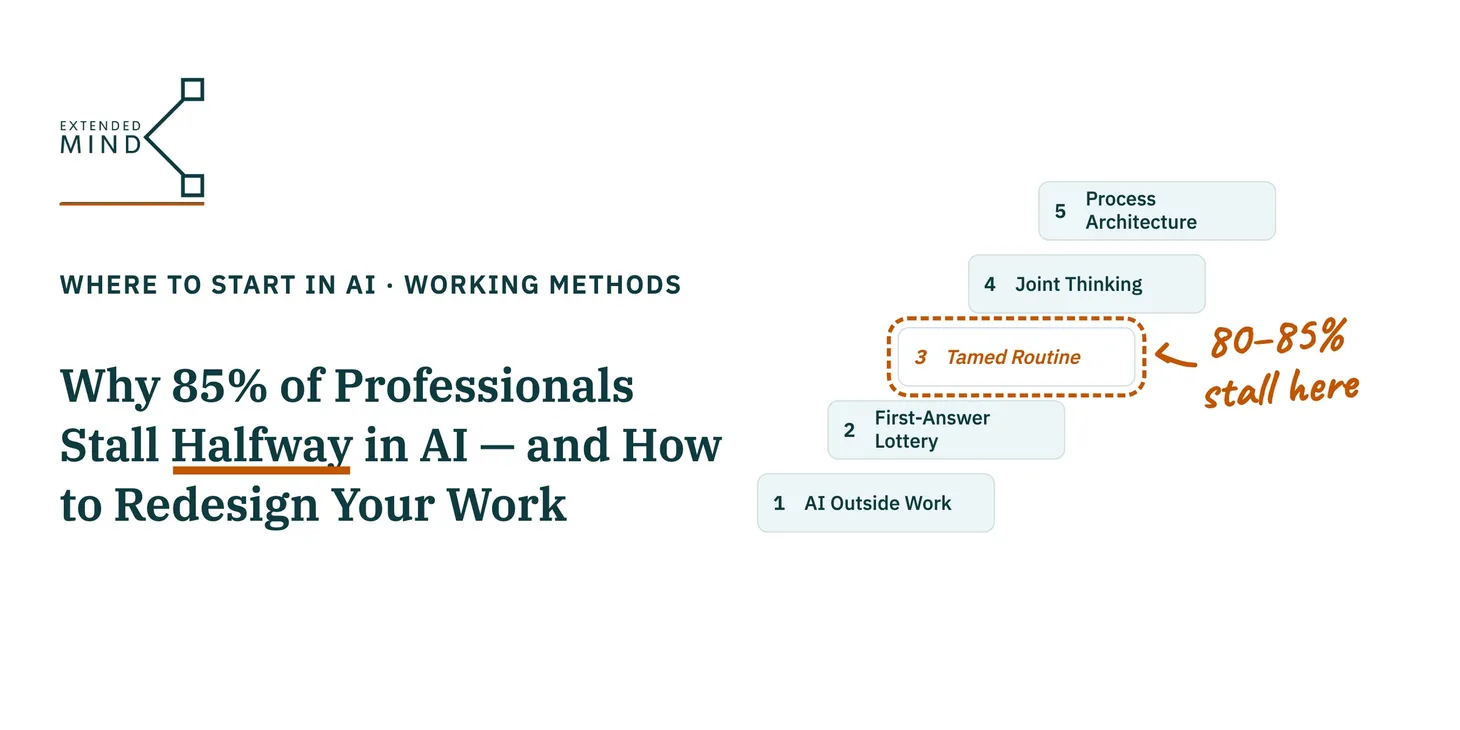
From the outside, it can feel as if they are already out of reach. You can catch up. But doing so requires rebuilding and refining your own work step by step. Along this path, it is easy to stop at a handful of convenient tricks or get bogged down in a stream of model outputs that never turn into decisions. I am especially interested in the stage where the value of AI is already obvious, yet the format of daily work remains unchanged.
To move deliberately and faster, you need to diagnose what exactly is holding you back, choose a specific change (a small process or part of one), and test it on a concrete task. Understanding the root cause keeps you from repeating fruitless attempts. Sometimes the right move is to drop AI where it does not actually help.
Why This Is Personal for Me
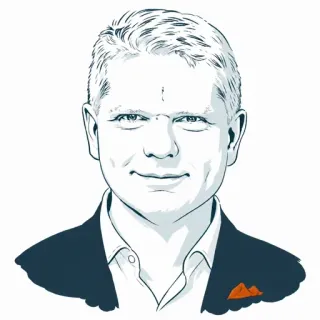
I am Alexander Shalaev, and I actively roll out AI across my own team and adjacent teams inside a large organization. It matters to me to stay a strong professional, take on complex problems, and grow alongside my team. I do not want to wake up one day as a professional “Neanderthal” who only knows how to work the old way.
That is why I founded Extended Mind: a space where I can keep developing my own practice and help you redesign your work where AI delivers real value. In articles, posts, and videos, I break down when it actually makes sense to bring in AI, what to delegate to it, and how to evaluate the result.
What to Measure Your Results Against
First and foremost, compare the result against your previous way of working: how long the entire task took, what errors occurred, and whether the original goal was achieved. That makes it clear what to keep and what to refine. All further progress is built on this foundation: learning to think more systematically and expanding your capabilities.
I want to walk this path together with you. If there are people around you who are also looking for ways to bring AI into their work, tell them about Extended Mind.